
On athletic longevity, rowing, and learning to train smarter as you age
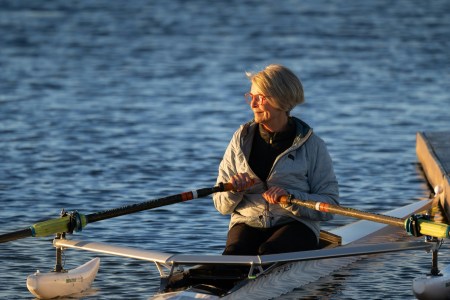
Each year, US Rowing holds a small ceremony for the octogenarians during Masters Nationals. They file up, receive their pins, and the rest of us 40-, 50-, and 60-somethings who think we’re getting old start clapping. In that applause is the collective thought: I want to be that person.
The one who’s 80 and still on the water, showing up, even if sub-eight minute 2,000 meter times are a mere memory.
I admire the women who are 10, 15, and 20 years older than me who are faster and stronger. I can’t help but wonder how they have managed to stay fit without the injury cycle I keep finding myself in.
None of these athletes didn’t get to that special point by accident. So how do I get from here to there?

Your body isn’t a bank
That first workout after you’ve been sick for a few days or taken a vacation is always a “reality check.” Your brain remembers the last time you crushed that same routine, but the body yells, “Not so fast!”
Fitness isn’t a savings account you deposit into and draw from later. Sure, there are compounding benefits to moving consistently over the years. The research clearly shows staying active adds years to your life and, even more importantly, quality to those years. Technically, I come back pretty fast thanks to muscle memory.
But you can’t go hard in January and expect it to pay off in June after taking it easy in April and May. That’s not how it works. If it did, I’d have an even harder time chasing these 60-something ringers than I already do!
The problem is the space for any deposits is getting smaller as I get older. I’m putting the time in. The returns aren’t matching.
Recovery is purposeful
Currently, my body has less tolerance for maximum effort. The hip flares up the early warning system if I stack back-to-back hard sessions. I’m forced to give recovery more time and thought than I used.
I keep hearing that recovery becomes more important as we age. Honestly, some days it’s hard to believe. My Instagram feed has masters women my age and older training, and they are not taking the gentle approach the influencers prescribe. Some of their “recovery” workouts are what I’d call a hard session.
Perhaps the answer is not doing less, but doing it with more attention.
Back to basics all the time
When the octogenarians receive their pins, we don’t see the work that got them there. Being members of a shared sporting community, we know the invisible work is there. Still, we don’t see the steps they had to take to keep getting down low into the seat and back out of it. Not the hip mobility circuits, the intentional easy paddles, the meals they tracked, or the sessions they skipped because that knee said “not today!”

I once viewed this invisible work as what you did in the off-season when real training wasn’t in full swing. This injury year changed that.
My rehab has forced me to think about what is really sustainable. I know I have to keep doing specific movements because stopping invites the pain to return. Pain means losing access to the thing that I love. Doing the thing that I love means retraining my posture because if I don’t sit up properly, my hip again turns on its warning system.
Foundation work is no longer optional. It is my price to play.
This stuff that nobody photographs is probably what separates the athletes competing at 80 from those who stop.
Learning to listen
As a person used to pushing themselves, to keep something in reserve isn’t intuitive. This injury has made me more fluent in what my body is saying. This may not be a “clean” injury–no broken bone, no snapped tendon–but the irritation and inflammation could become something more if I ignore it.
I spent years on the “push through it” mantra. Now I’m relearning the signals of inflammation versus a weak muscle versus workout fatigue. Aches and pains get louder as we age. I think some of that is because we haven’t encountered these pains before. Unfamiliar discomfort is harder to read.
Fluency in body signals might be one of the more trainable things about athletic longevity.
Still, sometimes it’s hard to accept that tomorrow I need to skip the weightlifting session and just do a very easy bicycle session.
What longevity in sport will take
I don’t have this figured out. I want to say that plainly because writing about sustainable fitness often comes from the finish line. I hope my finish line is far, far away. I’m in the middle, stuck relearning what works for me and what I can do now.
My body sets this timeline, and it’s not the one I would prefer. It requires listening to the signals historically overwritten and the unglamorous work, even when the acute pain finally dies away. And it’s going to keep changing. I bet what I need to nurture myself at 50 isn’t what I need today. The athletes I admire most seem to understand that long game training is something you keep figuring out.
And maybe one day, many, many years from now, I can get my pin.

Leave a Reply