

A 4-step framework for improving real estate content

Factually off, emotionally flat, or not relevant real estate content undermines an agent’s credibility with a potential buyer or seller. That’s why editing matters. Everything you generate needs refinement before clicking publish.
After more than a decade writing and editing real estate content, I ask four questions every time I sit with a piece of copy:
- Is it true?
- Is it specific?
- Is it written for the right person?
- Does it move them?
Editing never loses its importance, whether you choose to have AI generate a first draft or to write from scratch. Both workflows benefit from a close read.

In practice, editing real estate copy looks like this.
Phase 1: Factuality– Does the Copy Tell the Truth?
An AI-generated relocation guide listed South Carolina’s income tax rate as 3.99%. I caught that error mid-edit on a piece scheduled to publish in three days. It’s a detail any South Carolina resident would have flagged. Any relocating person could have mistaken it for the truth and been unpleasantly surprised by their first paycheck.
Factual errors in real estate copy erode trust and signal to readers that the source isn’t reliable or knowledgeable. That’s not what a real estate professional wants.
Verify the numbers, the neighborhood claims, the school district details, and the HOA language. Any claims need proof from a trustworthy source. Rewrite or cut claims that can’t be sourced.
Phase 2: Uniqueness– Does This Copy Sound Like Every Other Person?
If I had a dollar for every listing that opened with “stunning curb appeal” and closed with “this one won’t last,” I’d have a sizable nest egg by now. Templated language wastes the one thing an individual real estate agent has to work with: the specific character of a place.
Sarasota’s real estate market has a circus legacy, a thriving arts scene, and award-winning beaches (a claim that can be backed up by lists on U.S. News and World Report, TripAdvisor, and Dr. Beach). Its waterfront culture lures people from across the country. Horse farms roll into the horizon around Lexington, Kentucky, where bourbon distilleries and a basketball obsession border civic religion. These are assets to lean into with social media, articles, and web copy.
Copy collapsing into “desirable location with great amenities” throws away the most persuasive material available. Use editing to replace generic statements with the language that could only describe this property, in this place.
Phase 3: Relevance– Is This Copy Written for the Right Buyer?
Accurate and specific copy can still miss entirely if it’s aimed at the wrong reader. I once reviewed an article targeting retirees relocating to Central Florida that spent two full paragraphs on proximity to theme parks.
The editor in me immediately flagged it. A buyer who’s spent forty years working toward a quieter life isn’t scanning listings for proximity to a rollercoaster. They want walkable medical facilities, low-maintenance exteriors, and a community where they’ll feel at home. One that is close to leisurely activities like fishing, golfing, pickleball, and hobby sports.
Relevance asks who is most likely to buy this home or in this place. Lead with what that person cares about, even if it means cutting accurate, well-written details. Anything not in service to the audience needs to go.
Phase 4: Intent — Does the Copy Move the Reader?
The final editing pass is about understanding where in the decision process your reader is sitting, and writing to meet them there.
Top-of-funnel readers research. They want details, context, and specific local information they can’t find on every other listing site. Persuasive copy that leads with emotional benefits and urgency will slide right past them. They’re not ready.
On the other end, a buyer who’s narrowed their search to three neighborhoods doesn’t need another paragraph of backstory. They need to feel something. The advantages. The life this home makes possible. The reason to call today.
Strong real estate copy matches its register to its reader’s readiness. When those two things are misaligned, the writing might be technically sound and still fail to do its job. The editing question is “does this move the right person in the right direction?”
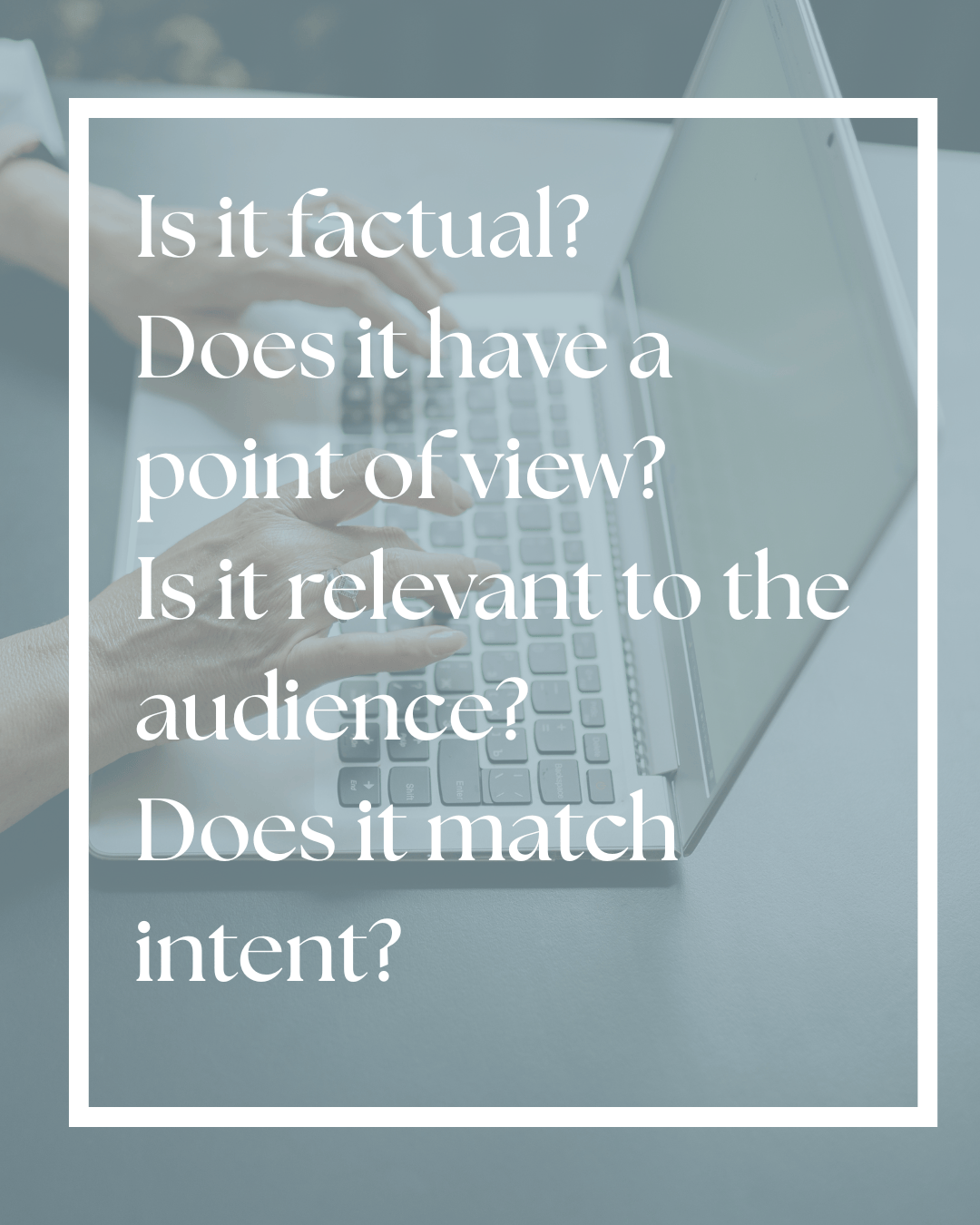
The Four-Question Edit Checklist
Run your content through these checks before any real estate copy hits the web:
✓ Every factual claim is accurate and verifiable
✓ The language is specific to this property and this place
✓ The copy speaks directly to the most likely buyer
✓ The tone and details match where that buyer is in their decision
Getting all four right is what separates copy that fills pipelines from copy that fills space. When you edit real estate copy, it strengthens trust with your clients and your brand reputation.
Need real estate copy that’s already been through the process? I specialize in long-form real estate content, listing descriptions, and relocation guides that do the work they’re supposed to.
Leave a Reply